

Controlled UVB vs. Sunlight and Sunbeds
It is widely observed that natural sunlight can improve symptoms — an insight that has shaped medical phototherapy. While it may resemble “strong sunlight”, ultraviolet light therapy is fundamentally different, relying on precise, controlled, and supervised treatment rather than uncontrolled exposure. What is phototherapy and why it is different:
- Targeted light. Uses narrowband UVB (311 nm), the wavelength proven to be most effective for treating inflammatory skin conditions. In natural sunlight, this therapeutic UVB makes up less than 10%, while the rest is unnecessary or harmful radiation. Sunbeds primarily emit harmful UVA light.
- Precise dosing. Natural sunlight is unpredictable. For medical and consistent treatment, accurately measured UVB dosing is essential to ensure effectiveness while minimising risk.
- Medical safety. Treatment starts with a safe dose and progresses through gradual, controlled increases based on the skin’s response — something neither natural sunlight nor sunbeds can provide.
- Lower risk. Unlike sunbeds, NB-UVB does not emit UVA radiation, which is associated with skin damage and an increased risk of skin cancer.
Think of the sun as a wildfire — powerful but unpredictable. A sunbed is a bonfire: more contained, yet still harmful. Medical phototherapy, by contrast, is like a surgical laser — precisely targeted, carefully measured, and used only for as long as needed to treat disease without unnecessary risks.


Does Phototherapy Work?
Absolutely! NB UVB phototherapy is a long-established, scientifically proven treatment that has been used safely and effectively in dermatology worldwide for decades and is supported by extensive clinical evidence.
- It helps reduce or eliminate itching, redness, and plaques, clear the skin and in vitiligo supports skin repigmentation. Many patients also report improved psychological well-being and overall quality of life.
- NB-UVB phototherapy is usually prescribed when topical treatments alone are not effective, when the condition is too widespread for creams, or before starting systemic or biological therapies. It can be used on its own or in combination with creams or medication, including biologics, and in many cases is effective as a stand-alone treatment.
Thanks to its versatile immune-modulating and cell-regulating effects, phototherapy can be used as an effective primary or secondary treatment for a wide range of dermatological conditions, including: Psoriasis, Eczema, Atopic dermatitis, Neurodermitis, Vitiligo, Mycosis fungoides, Lichen planus, Pityriasis lichenoides, Morphoea (Scleroderma), Chronic urticaria, Pruritus, Photodermatoses, etc.
Phototherapy is a lasting cornerstone of modern dermatology and a trusted choice for patients.
How Does Phototherapy Work?
NB-UVB phototherapy modulates the body’s own immune response directly within the skin, correcting the underlying mechanisms that drive chronic conditions such as psoriasis, eczema, and others. Rather than simply treating surface symptoms, ultraviolet light addresses the root of the problem by triggering key biological processes that restore balance to the skin’s immune environment. The mechanism of action depends on the condition being treated, and its major therapeutic effects include:
-
Switching off overactive immune cells. In conditions such as psoriasis, certain immune cells (T-cells) become overactive and drive persistent inflammation. NB-UVB selectively induces programmed cell death (apoptosis) in these cells, reducing the core drivers of disease activity.
-
Reducing inflammatory signals. NB-UVB lowers the expression of adhesion molecules such as ICAM-1, which act like “anchors” allowing inflammatory cells to accumulate in the skin. By reducing this adhesion, inflammation is calmed at its source.
-
Promoting anti-inflammatory messengers. NB-UVB stimulates the release of anti-inflammatory mediators, including interleukin-10 (IL-10), helping suppress excessive immune responses and reduce flare-ups.
-
Supporting repigmentation. In conditions such as vitiligo, NB-UVB works differently by stimulating the proliferation and migration of melanocytes (pigment-producing cells) from hair follicles to depigmented areas of skin.
Together, these actions re-calibrate immune activity locally in the skin, without broadly suppressing the body’s immune system — a key concern with some systemic medications. This targeted effect is closely linked to phototherapy’s strong safety profile.
Important! Many systemic and biological treatments require continuous, long-term administration, whereas light therapy is typically delivered in short, cyclical courses during flare-ups. This allows patients to regain control of symptoms and then enjoy treatment-free periods, rather than remaining on constant medication.
-
Crucially, phototherapy does not tend to lose effectiveness over time. Unlike some topical and systemic treatments, where response may diminish with prolonged use, NB-UVB remains a reliable option that patients can return to during future flares.
The key takeway. There is currently no cure for chronic skin conditions. However, phototherapy remains one of the most effective and reliable tools for long-term control across a wide range of skin disorders. By working with the body’s own biology to calm inflammation, restore immune balance, and support skin healing, it offers a dependable, repeatable treatment that patients can safely return to during flare-ups.
When NB-UVB Is Used and How Treatment Works
NB-UVB phototherapy is recommended by dermatology guidelines worldwide as an effective first- or second-line treatment*. For example, UK guidelines from the National Institute for Health and Care Excellence (NICE) recommend NB-UVB for psoriasis when creams alone are not effective, cause side effects, or before starting systemic or biological therapies. NB-UVB is chemical-free and can be safely combined with other treatments.
Treatment is usually clinic-based, but home treatment is possible and increasingly advocated when key requirements are met. Sessions are usually given two to three times per week, with improvement seen over several weeks. For most inflammatory skin conditions, a full course involves around 25–30 sessions, while vitiligo generally requires a longer-term approach.
The dose is started low and increased gradually as the skin builds tolerance, maximising effectiveness while minimising side effects. Treatment is delivered in short courses, allowing treatment-free periods, and importantly, ultraviolet light does not usually lose effectiveness over time, meaning it can be safely repeated during future flare-ups. Sessions are brief and painless, with only mild, temporary redness or warmth in some cases.
Traditionally, phototherapy treatment has used fluorescent light tubes. New-generation LED phototherapy devices now offer more even light distribution, improved efficiency, greater stability, and flexible, targeted use — making them particularly well suited to modern home phototherapy.
You Can Now Get Phototherapy Treatment at Home
Phototherapy was once limited by frequent hospital visits, making access difficult for many patients. Today, clinical evidence and medical guidelines support home-based NB-UVB phototherapy as an effective alternative. When used correctly with a medical-grade device, it delivers results comparable to hospital treatment and fits more easily into daily life — leading to better adherence and better outcomes.
Home treatment can be done on your own schedule and started at the first sign of a flare-up, removing the need for frequent travel and giving you a reliable, confidence-building way to manage your skin condition at home.
From now on, you can choose a treatment path that truly fits your needs.
What Matters Most for Home Phototherapy?
Dermatologists emphasise that home phototherapy is not a DIY treatment and choosing the right device is essential for safety, accuracy, and hospital-grade results at home.
- Safety and effectiveness depend on a trusted, certified medical device; accurate dosimetry; proper adherence to clinical treatment protocols.
How UV Tactus addresses dermatologists’ key concerns about phototherapy at home:
-
CE - marked professional medical device (Class IIa, MDR 2017/745) for safe and effective use at home. It is certified by TÜV Rheinland (Germany) and meets the latest and most rigorous medical device regulatory frameworks. Registered with the MHRA for UK.
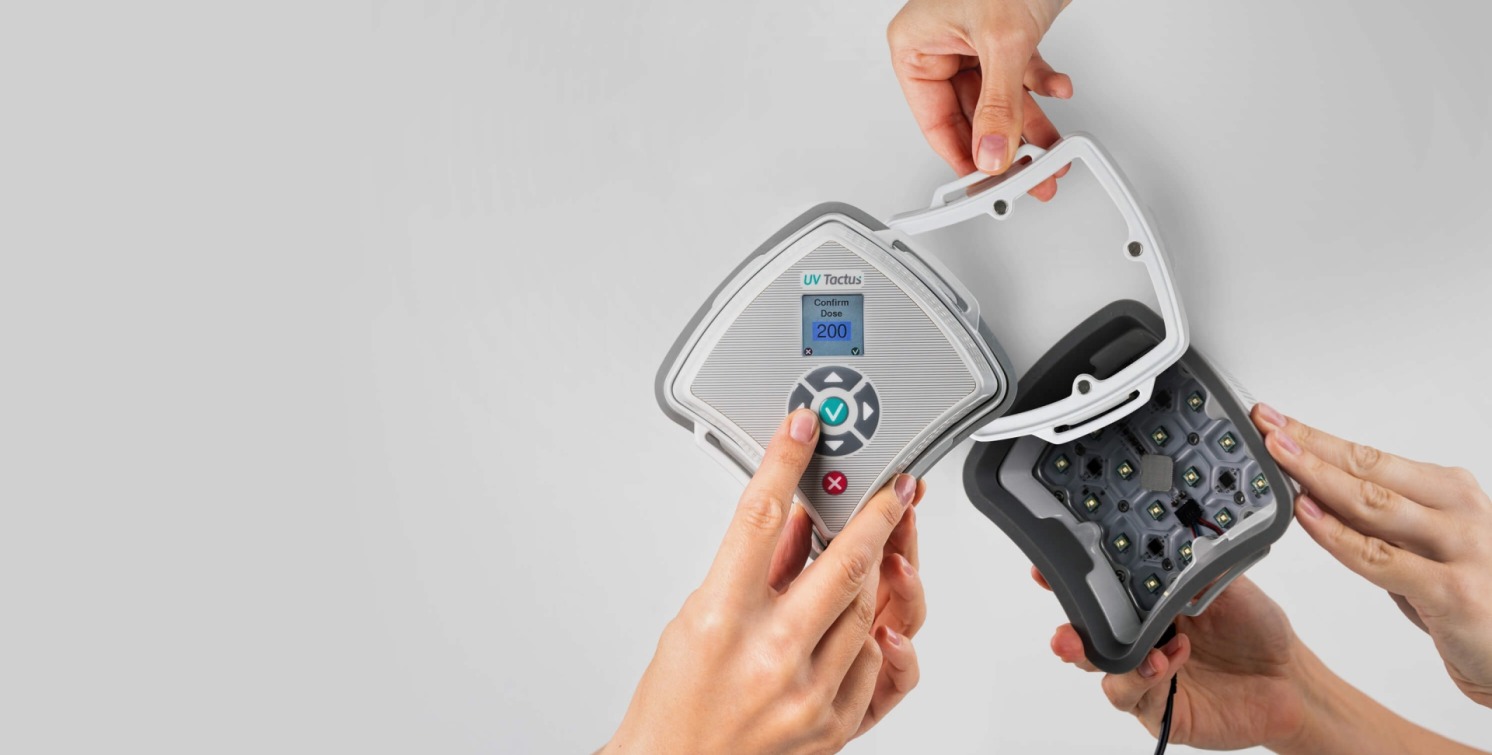
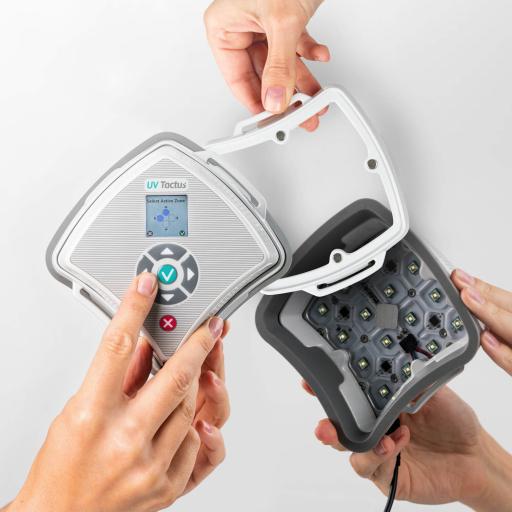
- It is the only home NB UVB device with LED light source and a professional integrated dosimeter, enabling the same dose accuracy and protocols used in clinical settings. The dose of light is measured in joules, not time, reducing the risk of under or over-exposure.
-
The UV Tactus app helps patients follow their personal treatment protocol correctly and consistently.
-
Free one-to-one onboarding ensures a confident start, with ongoing guidance available after purchase.
This combination of UV Tactus’ advanced features delivers clinic-level results with the highest level of safety at home.
The LITE study** proves that home-based phototherapy is just as effective as treatment in a clinic – regardless of skin type. In fact, patients who treat themselves at home often achieve better results, as they are more satisfied with the process and follow it more consistently. Phototherapy at home can significantly improve quality of life, offering a safe, effective and convenient alternative – even for those trying phototherapy for the first time. This research highlights the importance of making home phototherapy more accessible, so that more people can benefit from this scientifically proven treatment.
**The LITE (Light Treatment Effectiveness) Study was conducted from 2019 to 2023 enrolling 783 patients. The principal investigator of the LITE Study is MD MSCE, James J.Leyden Professor of Dermatology at Epidemiology, Director Psoriasis at Phototherapy Treatment centre at University of Pennsylvania Perelman School of Medicine
How to Choose UVB Medical Device?
When choosing an at-home phototherapy device, make sure it meets AT LEAST this essential criteria for safe and effective management of your condition:
- CE-marked medical device (Class IIa, MDR 2017/745 EU) – built to the highest medical safety and quality standards
-
LED technology – delivers precise, even UVB light to every millimetre of the skin
-
Integrated dosimeter – ensures every treatment is accurate, effective, and safe, no risk of under- or over-exposure
-
Dose measured in joules, not time – hospital-grade precision for better results and fewer side effects
-
Continuous expert support – guidance and advice whenever you need it
-
Comprehensive warranty – confidence and peace of mind for long-term use
-
Trusted manufacturer – quality you can trust, with care and support you can rely on
UV Tactus ticks every box and goes beyond standards — advanced technology trusted by patients and doctors to deliver results beyond expectations.
F.A.Q.
Yes — phototherapy is a highly effective, well-established treatment and is commonly used as a first- or second-line option for chronic conditions such as psoriasis, eczema, and vitiligo. Supported by decades of clinical use and international medical guidelines, it is widely recommended and prescribed by dermatologists as a safe, reliable therapy.
Phototherapy uses precisely controlled doses of UV light to calm inflammation, slow excessive skin cell growth, support repigmentation, and promote natural skin healing. With regular, consistent sessions, the majority of patients experience significant and long-lasting improvement, often reducing their reliance on creams or other treatments.
Thanks to its versatile immune-modulating and cell-regulating effects, phototherapy can be used as an effective primary or secondary treatment for a wide range of dermatological conditions, including: Psoriasis, Eczema, Atopic dermatitis, Neurodermitis, Vitiligo, Mycosis fungoides, Lichen planus, Pityriasis lichenoides, Morphoea (Scleroderma), Chronic urticaria, Pruritus, Photodermatoses, etc.
Results depend on your specific condition, how your skin responds, and how consistently you attend sessions (usually 3 times per week).
First results often appear after a few weeks, but light therapy works gradually — consistency is crucial to achieve the best results and shorten the time to improvement.
-
Psoriasis: A typical course averages around 25 sessions. Many patients see clear improvement within weeks and a significant reduction in the need for steroid creams by the end of the course.
-
Vitiligo: Progress is slower and requires a longer-term approach, often with treatment continuing for several months and sometimes up to a year. Doctors usually assess for signs of repigmentation within the first six monthsbefore deciding whether to continue.
-
Remission: After completing a course, many patients enjoy treatment-free periods, during which the skin remains stable or clear.
Phototherapy, particularly Narrowband UVB (NB-UVB), is considered very safe and has been used for decades with well-established safety profiles. Unlike older treatments like PUVA, the largest studies on NB-UVB have not shown an increased risk of skin cancer. It does not typically lose its effectiveness over time, meaning you can have repeated courses over many years. As a precaution, medical guidelines recommend that if you reach 500 sessions in your lifetime, you should receive regular specialist skin cancer checks.
- The long-term safety profile of NB-UVB is well-established from decades of clinical use. This stands in contrast to some newer systemic drugs, where robust data on risks associated with continuous, long-term use is still being gathered. This extensive track record allows for clear, evidence-based safety protocols.
Concerns about skin cancer are completely understandable when considering any treatment that uses ultraviolet radiation. Cancer risk is known to be influenced by excessive or uncontrolled UV exposure, particularly UVA light, which is more strongly associated with photo-ageing and cancer. For this reason, older treatments such as PUVA (psoralen plus UVA) are known to carry a higher long-term cancer risk.¹³
- By contrast, narrowband UVB (NB-UVB) phototherapy has been used in dermatology for many decades, and large long-term studies have not shown a proven association between NB-UVB treatment and an increased risk of cancer when it is prescribed, dosed and monitored correctly.³ NB-UVB delivers a very specific UVB wavelength (311 nm) and does not emit UVA, which significantly improves its safety profile compared with older phototherapy methods.¹³
- Most research indicates that NB-UVB carries little to no additional risk beyond normal everyday exposure to natural sunlight, while offering the advantage of controlled, medically targeted dosing rather than unpredictable sun exposure.⁴
As a precaution, dermatology guidelines recommend long-term skin monitoring only for patients who receive very high cumulative numbers of treatments (typically more than 500 whole-body sessions), particularly in individuals with additional risk factors such as fair skin or significant past sun exposure.¹
- When NB-UVB is used at home, correct dosing and control are especially important. Dermatologists consistently emphasise that phototherapy at home should follow the same treatment protocols and dose accuracy used in clinics.¹
This is where UV Tactus plays an important role. UV Tactus is a regulated medical device for home use that delivers medical-grade NB-UVB (311 nm) without UVA, incorporates a professional-grade dosimeter to ensure accurate dosing, and allows treatment to follow established clinical protocols. The UV Tactus mobile app guides patients step by step through their prescribed treatment plan, helping to prevent over- or under-exposure, and patients also receive a free one-to-one video onboarding session so treatment starts confidently and correctly from day one.
When NB-UVB phototherapy is delivered using a properly regulated home device, with accurate dosing, UVA-free light and appropriate guidance, it is considered a safe and well-established treatment with no demonstrated increase in skin cancer risk.¹³⁴
References:
¹ British Association of Dermatologists & British Photodermatology Group.
Guidelines for narrowband ultraviolet B phototherapy (2022).
British Journal of Dermatology.
National Institute for Health and Care Excellence (NICE).
Psoriasis: assessment and management. UK clinical guidance.
³ Boswell L et al.
Phototherapy for psoriasis – outdated or underused?
British Journal of Dermatology 2018; 179:1148–1156.
DOI: 10.1111/bjd.17021
⁴ Kosmadaki M, Antoniou C.
In: Katsambas AD et al. (eds.) European Handbook of Dermatological Treatments.
Springer Nature Switzerland AG, 2023.
DOI: 10.1007/978-3-031-15130-9_127
While there are few absolute contraindications to phototherapy, such as a history of light sensitivity, genetic predisposition to skin cancer, relative contraindications include a personal history of skin cancer or a poor response to past phototherapy.
It’s essential to discuss potential risks with your doctor, particularly if you have lighter skin, are taking sun-sensitizing medications, or are using immunosuppressive drugs.
Phototherapy is not recommended for individuals with severe systemic diseases or those with photodermatoses, which worsen with light exposure. Always consult your doctor before starting phototherapy to ensure it's safe and appropriate for your specific condition.
Yes — phototherapy can be done at home, provided key medical requirements are met.
Clinical evidence and dermatology guidelines support home-based NB-UVB phototherapy for patients when it is properly prescribed, supervised, and delivered using a certified medical-grade device. When done correctly, home treatment can achieve results comparable to clinic-based phototherapy, while offering greater convenience, better adherence, and the ability to start treatment as soon as a flare-up occurs.
- However, safe and effective light therapy at home depends on using a trusted medical device that ensures accurate dosing, is easy to use, and helps patients follow the treatment correctly.
Phototherapy uses specific wavelengths of medical light to treat a wide range of chronic conditions, including Psoriasis, Eczema, Atopic dermatitis, Neurodermitis, Vitiligo, Mycosis fungoides, Lichen planus, Pityriasis lichenoides, Morphoea (Scleroderma), Chronic urticaria, Pruritus, Photodermatoses, and others.
The light penetrates the skin and works at a biological level to decrease inflammation, slow abnormal skin cell growth, and support natural healing processes. Narrowband UVB is most commonly used because it effectively targets the skin without damaging deeper tissues.
With regular sessions, phototherapy helps control symptoms and improve the appearance and health of the skin over time. It is one of the oldest and most scientifically proven treatments in dermatology, widely used and recommended by doctors around the world. At its core, phototherapy creates a gentle “biological reset” in the skin through several key actions:
-
Calming the immune system: UV light reduces the activity of overactive immune cells (T-cells) that drive inflammation.
-
Slowing excessive cell growth: In conditions such as psoriasis, it helps normalise the rapid turnover of skin cells.
-
Restoring colour: In vitiligo, UV light stimulates pigment-producing cells (melanocytes) in hair follicles to multiply and migrate into depigmented areas.
-
Supporting skin healing: In certain conditions, it can improve skin thickness, elasticity, and overall skin health.
By working with the body’s own biology rather than simply masking symptoms, phototherapy offers a proven and effective way to manage chronic skin conditions over the long term.
In the hours following a session, it is normal to experience:
- Redness (Erythema): This is the most common side effect. It usually starts 3–5 hours after treatment, peaks at 12–24 hours, and fades by 72 hours.
- Mild Discomfort: Your skin may feel itchy, dry, or tender, similar to a mild sunburn.
- Tanning
You should speak to your phototherapy nurse or doctor if you experience:
- Severe Reactions: You develop painful redness, blistering, or skin peeling.
- Eye Irritation: You experience eye pain or grittiness, as UV light can cause temporary inflammation of the eye (photokeratitis) if goggles are not worn correctly.
- New Medications: You start any new tablets or creams. Some medicines (and even herbal remedies) can make your skin highly sensitive to light, which could lead to a severe burn.
- Health Changes: You notice new or changing moles, or if you become pregnant (though UVB is safe in pregnancy, your medical plan may need adjusting).
Phototherapy is the medical use of specific wavelengths of ultraviolet (UV) radiation to treat skin disorders. There are several distinct types of light treatment, each suited to different conditions and depths of skin involvement. Modern UV treatment is broadly divided into phototherapy, which uses light alone, and photochemotherapy, which combines light with light-sensitising medication.
The main types of phototherapy include:
- Narrowband UVB (NB-UVB) phototherapy. Narrowband UVB treatment is the most commonly used and first-line treatment today. It uses a precise wavelength (311 nm) that targets the outer layers of the skin. Importantly, NB-UVB is considered safer than UVA-based treatments, as it does not require photosensitising medication and has a more favourable long-term safety profile. NB-UVB is widely used for psoriasis, eczema (atopic dermatitis), and vitiligo and others and can be delivered both in clinics and at home when prescribed and supervised appropriately.
- Broadband UVB (BB-UVB). An older form of UVB therapy using a wider range of wavelengths. It has largely been replaced by NB-UVB due to better effectiveness and safety.
- UVA phototherapy. UVA light penetrates deeper into the skin and is used for specific conditions: PUVA combines UVA light therapy with a medication called psoralen and may be used for thicker or treatment-resistant plaques; UVA1 light therapy uses long-wave UVA and is mainly used for conditions involving skin hardening, such as morphoea. These light therapy treatments are clinic-based only and are not suitable for home use.
- Excimer laser or excimer light (308 nm) is used for small, localised patches of psoriasis or vitiligo. This treatment is clinic-based and cannot be used at home, as it requires specialised equipment and professional operation.
Which treatment is right for me?
The choice depends on the condition being treated, the depth and extent of skin involvement, and individual medical factors. Narrowband ultraviolet light therapy is often the preferred first option due to its effectiveness, safety profile, and ability to be used at home under medical guidance. Other treatments may be considered when NB-UVB is not suitable or effective.
Although both use light, red light therapy and UVB phototherapy serve very different purposes in clinical practice. Different types of light penetrate the skin to different depths and trigger different biological effects in the body. This is why various light therapies are used for different purposes — from muscle recovery and cosmetic skin support to treating specific medical conditions. What matters most is matching the type of light to the medical need and using therapies that are supported by clinical evidence and medical guidelines.
Red or infrared light is mainly used for general skin support and wellness. For chronic inflammatory skin diseases such as psoriasis, eczema, and vitiligo, UVB phototherapy is the evidence-based treatment used in dermatology, while other light types serve different, non-therapeutic roles.
Red light therapy
-
Uses visible red or near-infrared light (typically 600–900 nm)
-
Penetrates deeper tissues, supporting circulation, collagen stimulation, wound healing, and muscle recovery
-
Commonly used in wellness, aesthetic, and sports medicine
-
Not recommended in dermatology guidelines as a treatment for psoriasis, eczema, or vitiligo.
UVB phototherapy
-
Uses UVB wavelengths (≈290–320 nm), including narrowband UVB 311 nm
-
Acts in the upper layers of the skin and directly modulates the skin’s immune response, reduces inflammation, and normalises abnormal skin cell growth.
-
Supported by decades of clinical practice and scientific evidence and is gold-standard treatment for psoriasis and eczema, and widely used for vitiligo
-
Requires precise dosing and protocol-based treatment for safety and effectiveness
In simple terms
-
Red light supports general skin wellness
-
UVB phototherapy treats psoriasis, eczema, vitiligo
-
UV Tactus delivers this proven medical therapy safely at home
UV Tactus brings clinically proven UVB phototherapy (NB UVB 311 nm) into the home. It delivers the same type of ultraviolet light used in dermatology clinics, with accurate dose control and protocol guidance — allowing patients to follow evidence-based treatment safely and consistently at home.